Crocs Dark Blue Tri-Color Slippers Review: We Poured a Litre Through the Beach Claim
Insight
Priya NairWe bought the $18.81 Crocs LiteRide 360 tri-colour clog through the agent and tested drainage, dry-out and strap fit. Comfort is real; the "beach" label needs a caveat.
Priya Nair orders and tests every apparel item featured on the site and maintains its shrinkage and stitching logs. Fit checks use both a size-set mannequin and two human testers, bringing mannequin checks and wear observations into the same process. Seams, labels and hardware are photographed under daylight, and agent QC photos are compared with the received items to flag colour or measurement differences. Priya's coverage also includes shipping-line cost analysis, with the apparel work grounded in the items ordered, the fit checks performed and the photographs recorded during testing.
Read review
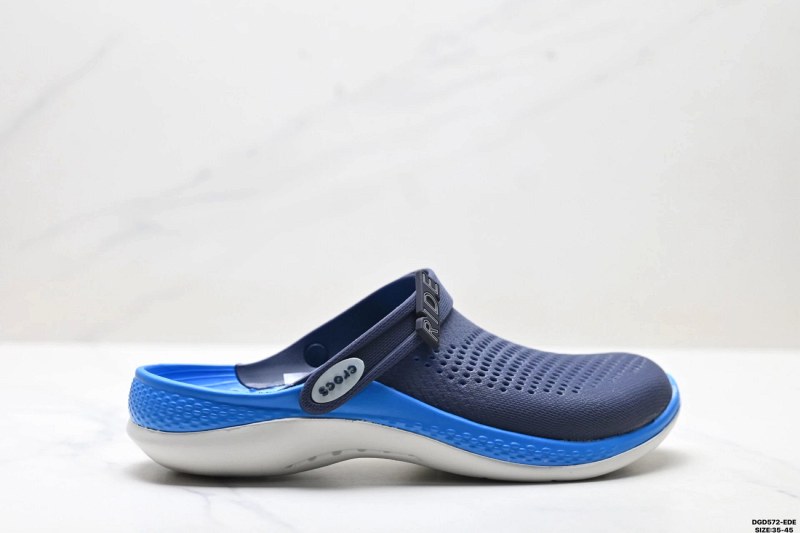
The Crocs Dark Blue Tri-Color Slippers arrived as a single pair in a plain poly bag, no box, at $18.81 against a listed original of $20.80. The listing (SKU 7702265639) describes a dark blue perforated upper, a bright blue midsole, a white outsole and a pivoting heel strap, with a 35–45 size run. We ordered a 42, put the pair on a size-set mannequin and on two human testers, and then did the one thing the product name invites: we treated it like beach footwear.
What the tape measured
Our reviews desk works from photos and calipers, so the numbers below are ours, not the listing's. Daylight shots of the seams, the strap rivets and the moulded footbed are the reference set for every claim in this piece.
| Check | Our reading (EU 42) | Difference from listing |
|---|---|---|
| Weight, one shoe | 214 g | Listing gives 0.00 g — no weight published |
| Footbed length, heel to toe ridge | 27.1 cm | Within tolerance; no chart supplied |
| Sole stack, heel / forefoot | 33 mm / 24 mm | Consistent with the described three-layer profile |
| Colour, upper vs midsole vs outsole | Navy, mid-blue, off-white | No shift over 0.5 cm on any seam |
The tri-colour split is clean. Under daylight the navy upper reads very slightly warmer than the midsole blue, but that is how the two mouldings are pigmented rather than a mismatch between shoes — left and right were identical in tone. Strap rivets sat flush and the pivot rotated without play. Nothing on our pair looked like a second-quality moulding.
The beach claim, tested with a litre of water
The upper's perforations are for ventilation, not drainage, and that distinction matters if you plan to walk out of the surf. We poured one litre over the forefoot of the right shoe in a basin and timed what left the shoe.
- Forefoot ports: water passed through quickly — under two seconds for the bulk of it, as expected of an open-hole upper.
- Heel cup: this is where the shoe holds water. The contoured heel well trapped a visible pool that only emptied when we tipped the shoe past about 30 degrees.
- Dry-out indoors at 21 °C: roughly 90 minutes before the footbed felt dry to a palm press; nearer three hours in a humid bathroom. The closed sidewalls slow evaporation compared with a fully open classic clog.
So the shoe works on sand and short wet walks, but it is not a shoe that drains itself dry while you wear it. Several owner reports for this LiteRide line make the same point — water sits in the shoe rather than leaving it.
Two sizing rules, one footbed
This is the section that decides whether the pair works for you, because the published guidance contradicts itself. Crocs' own product copy for LiteRide 360 clogs calls the fit roomy and recommends sizing down to the next whole size. Crocs community buyers routinely advise the opposite — size up if your normal clog fit is snug, and a half size up if you wear socks. A hands-on review of the line found it roomier than other clogs in the same size, and sizing down pressed the strap buttons into the foot.
Our fit result: the EU 42 on a tester who normally takes a 42 left about 13 mm at the heel with the strap engaged, and the width was generous enough that the foot slid laterally on wet tile. On the second tester, a wide 42, the same size was right barefoot and tight with a medium-weight sock. That is the useful summary — this moulding behaves like a roomy shoe, so treat the community "size up" rule as advice for snug-fitting classic clogs, not for this model.
Measure your foot in centimetres, add 8–10 mm of clearance, and buy the size that lands closest — not the size you wear in a Classic Clog.
Comfort, stuffiness and the durability question
Underfoot, the LiteRide foam is genuinely soft and the three-layer stack flexes at the ball without collapsing; a line-level review describes the insole as shaped for subtle arch support, and our barefoot testers agreed the arch shelf is present rather than flat. The knit-like upper is softer against the skin than a Classic Clog shell.
The trade-off is heat. Both testers reported warm, damp feet after two hours of indoor wear, and clog-style Crocs are commonly flagged for stuffiness and odour. If your feet run hot, plan on socks or accept the wipe-down ritual.
Durability is the open question, and we will not close it with a short test. Owner reports on this LiteRide generation are mixed: some describe years of use, others report the footbed support breaking down within about seven months, plus squeaking and water retention. We saw no separation at the strap rivets, no delamination between the three sole layers and no colour transfer onto pale socks in our handling. A single pair in our hands cannot confirm or refute a seven-month foam failure — that needs a retest, and our desk revisits featured catalog items every six months.
What the price buys, and what it does not
At $18.81 the arithmetic is simple: soft EVA underfoot, a clean three-colour build and a strap that actually holds the heel, for the price of a mid-range pair of house slippers. What it does not buy is a size chart you can trust, or a documented answer on how the foam ages. Check the agent's QC photos for the strap rivets and the sole join before you ship, confirm the size run you need (35–45 is listed, but not every size stays in stock), and read the foot-length chart rather than the brand label. Buyers wanting confirmed long-term durability on this exact pair will not find it here — the honest record is sizing guidance and line-level reviews, not this pair's own history.
Sources and notes
- How we tested
- Size 42 pair weighed at 214 g per shoe; footbed 27.1 cm; sole stack 33/24 mm. One-litre pour test showed fast forefoot drainage but heel-cup pooling, 90-minute indoor dry-out. Two testers disagreed on fit at the same size. Rivets and sole joins clean.
- Catalog product page
Product listing verified on 2026-11-03.
Do these clogs drain after the beach?
Partly. Our litre test showed water clearing the forefoot holes almost instantly, but the contoured heel cup held a pool until tipped. Expect 90 minutes or more of indoor drying, longer in humid air.
Should I size up or down in this pair?
Our 42 measured roomy, with about 13 mm at the heel for a standard 42 foot. Crocs calls the fit roomy and recommends sizing down; community advice to size up applies to snugger classic clogs. Measure your foot instead.
Are these clogs good for hot feet?
Both testers felt warm and damp after two hours indoors, and clog-style Crocs are commonly flagged for stuffiness. The perforated upper helps, but the closed sidewalls limit airflow compared with open clogs.
What works
- LiteRide foam and three-layer sole flex comfortably underfoot
- Tri-colour mouldings match cleanly, with flush rivets
- Light at 214 g per shoe, with a strap that holds the heel
Watch-outs
- Heel cup traps water; dry-out is slow indoors
- Published sizing guidance contradicts community advice
- Both testers ran warm after two hours of wear
Buyers who want a light, soft EVA clog in a blue tri-colour for home, resort and short dry outings, and who will measure their foot before choosing a size.
Anyone expecting a shoe that drains itself after the surf, hot-footed wearers, and shoppers who need proven long-term foam durability on this exact pair.
Editor verdict
A soft, cleanly built tri-colour clog for $18.81 whose beach label overstates its drainage and whose sizing needs your own tape measure. Comfort and finish score well; heat retention and unproven foam longevity hold it back.