Dark Streetwear & Accessories Review: Color and Styling
Insight
Jonas ReinhardtThe key to dark streetwear styling isn't lowering the brightness of every piece, but arranging clear layers, textures, and visual focal points within a dark base. The navy pullover top, charcoal hoodie, black-gray patterned shorts, and white sneakers in the image form a cool, low-saturation main body, then use the white shoe surface and light-colored prints to brighten the overall layout. ## Decide the Main Color First, Then Arrange Contrast Colors Navy has more depth than pure black, making it
Jonas Reinhardt is Editor-in-Chief of the Kakobuy Yupoo Review Desk, writing agent comparison tables and leading retests. The work covers shopping-agent operations, parcel forwarding and QC photo standards, with Jonas signing off every hands-on score. Reviews are checked for order dates, QC photo notes, warehouse measurements and shipping-line timings, connecting the comparison tables with the records behind their scores. Each month, two reviews are selected at random and audited against original photographs and receipts, making publication approval and recurring checks of the supporting material part of the editorial work.
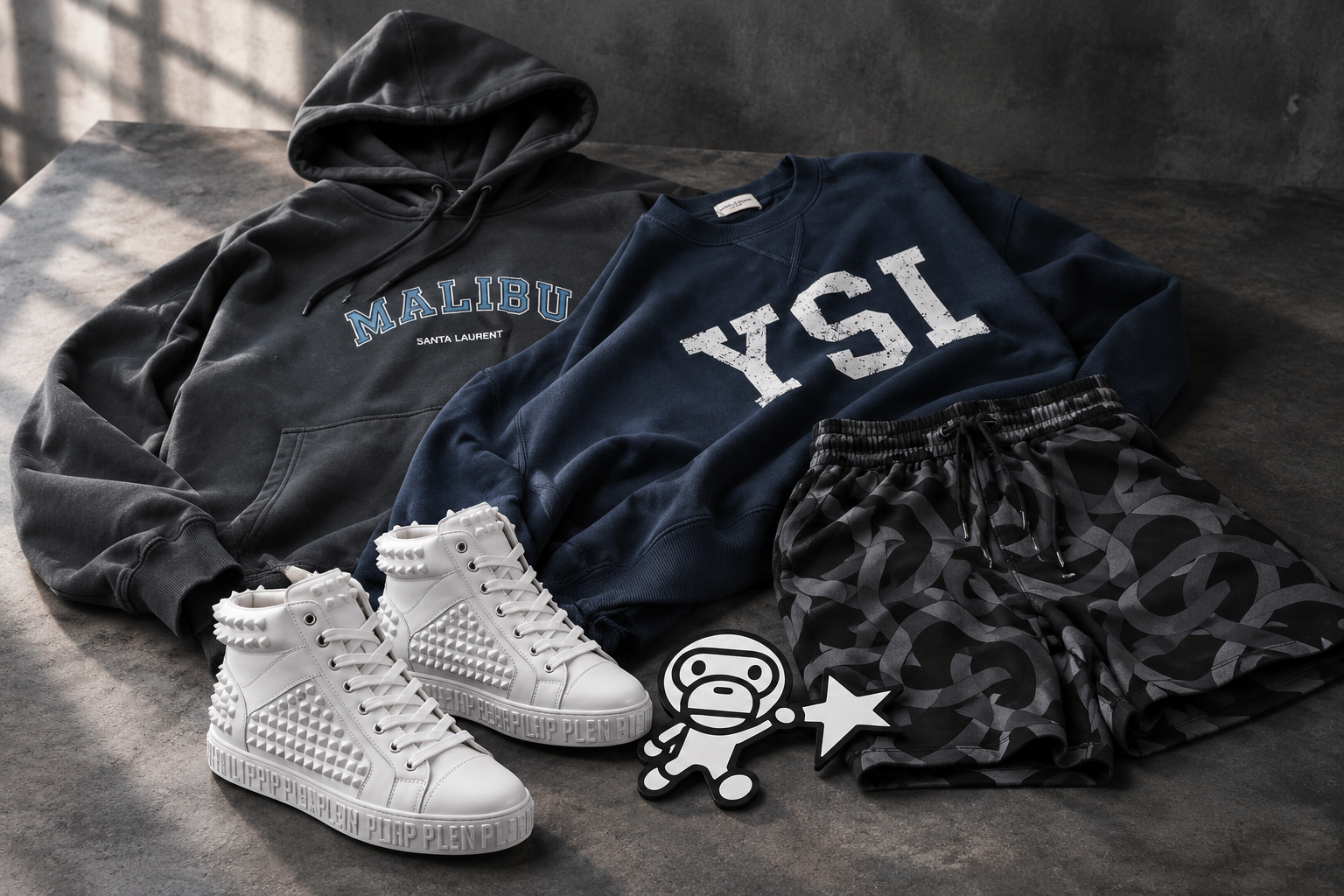
The key to dark streetwear styling isn't lowering the brightness of every piece, but arranging clear layers, textures, and visual focal points within a dark base. The navy pullover top, charcoal hoodie, black-gray patterned shorts, and white sneakers in the image form a cool, low-saturation main body, then use the white shoe surface and light-colored prints to brighten the overall layout.
Decide the Main Color First, Then Arrange Contrast Colors
Navy has more depth than pure black, making it suitable as the core upper garment. The large white letter print on the chest immediately becomes the visual center, so the lower garment should not use high-brightness colors. Black-gray abstract patterned shorts can continue the dark tone while using pattern changes to avoid the whole outfit being too flat.
Color matching can be arranged in this order:
- Main colors: navy, charcoal gray, and black, responsible for establishing a stable street vibe.
- Brightening colors: white shoe surface, white letters, and light-colored patterns, used to create contrast in light and dark.
- Small area accent colors: if adding a white short-sleeve with red pattern, it should be used as an inner layer or localized visual point, not adding large areas of bright accessories.
Use Silhouette Differences for Layering
The crew neck long-sleeve top has a simple silhouette, suitable for pairing with more patterned shorts. The shorts' elastic waistband and drawstring make the waist structure more defined; when laying flat, place the drawstring naturally at the center to avoid covering the main pattern. If worn, it is recommended to let the shirt hem cover part of the waistline but keep the shorts' pattern visible.
The charcoal gray hoodie is more suitable as an outer layer alone. The hood, drawstring, front pocket, and long sleeves add volume to the upper body, and the surface wrinkles and worn look bring a stronger vintage street vibe. When styling, you can choose cleaner bottoms and shoes to make the hood shape and front pocket the focal points of the silhouette.
White Shoes Balance the Dark Areas
White high-top sneakers play an obvious brightening role in the entire layout. The laces, upper decorative structure, and raised sole lettering have high detail density, so it is suitable to place them in the foreground of the image, with the left and right shoes at a slight angle difference to avoid the shoes completely overlapping.
If worn, white shoes can echo white letters or light-colored prints. To maintain proportion, when the upper garment pattern is large, the shoes need not have too many same-color decorations; keep the shoe surface clean, which can make the whole outfit look sharper.
Keep Three Visual Zones When Laying Out
When laying flat a set of dark clothing, it can be divided into three zones: upper garment, lower garment, and shoes and accessories. Place the upper garment at the back or top, providing the largest color block; put the shorts on the side, showing the waist and pattern; place the shoes in the foreground as a bright visual anchor. Accessories should be close to the shoes or the edge of the lower garment, not covering prints, drawstrings, or shoe details.

The white-black patterned object in the image is suitable for a small graphic echo, but its specific category and back structure cannot be confirmed from the current image alone. To replicate a similar layout, prioritize accessories with clear silhouettes and no more than two to three colors, and place them next to the shoes to form a visual connection from the clothing print to the shoe details.
Practical Order of Styling Judgment
First, check whether large color areas are concentrated; then see if the upper garment print and lower garment pattern compete for attention; finally, check whether shoes and accessories provide sufficient blank space. The advantage of the current combination is the unified dark main body, with white details distributed across the upper garment print, shoe surface, and accessory area, making the visual route relatively clear.
When further judging the wearing effect, focus on the shoulder line, garment length, pant leg width, and the shoe inner side and insole details after wearing. Flat lay images help confirm colors, pattern positions, and layout relationships, but cannot directly determine fabric composition, hand feel, size fit, warmth, or actual wearing performance.