How to Style a Black-and-Khaki Color-Block Puffer
Insight
Jonas ReinhardtThis black-khaki color-block stand-collar puffer is best styled with a black, khaki, and gray color palette, creating clear layers through the contrast between darker upper and lighter lower blocks. Its visual focus isn't on complex decoration but on the contrast between the black shoulder/chest area, the khaki body, and the horizontal quilted sections, so keep other pieces simple to avoid distracting from the overall look. ## First, Understand the Color and Structure 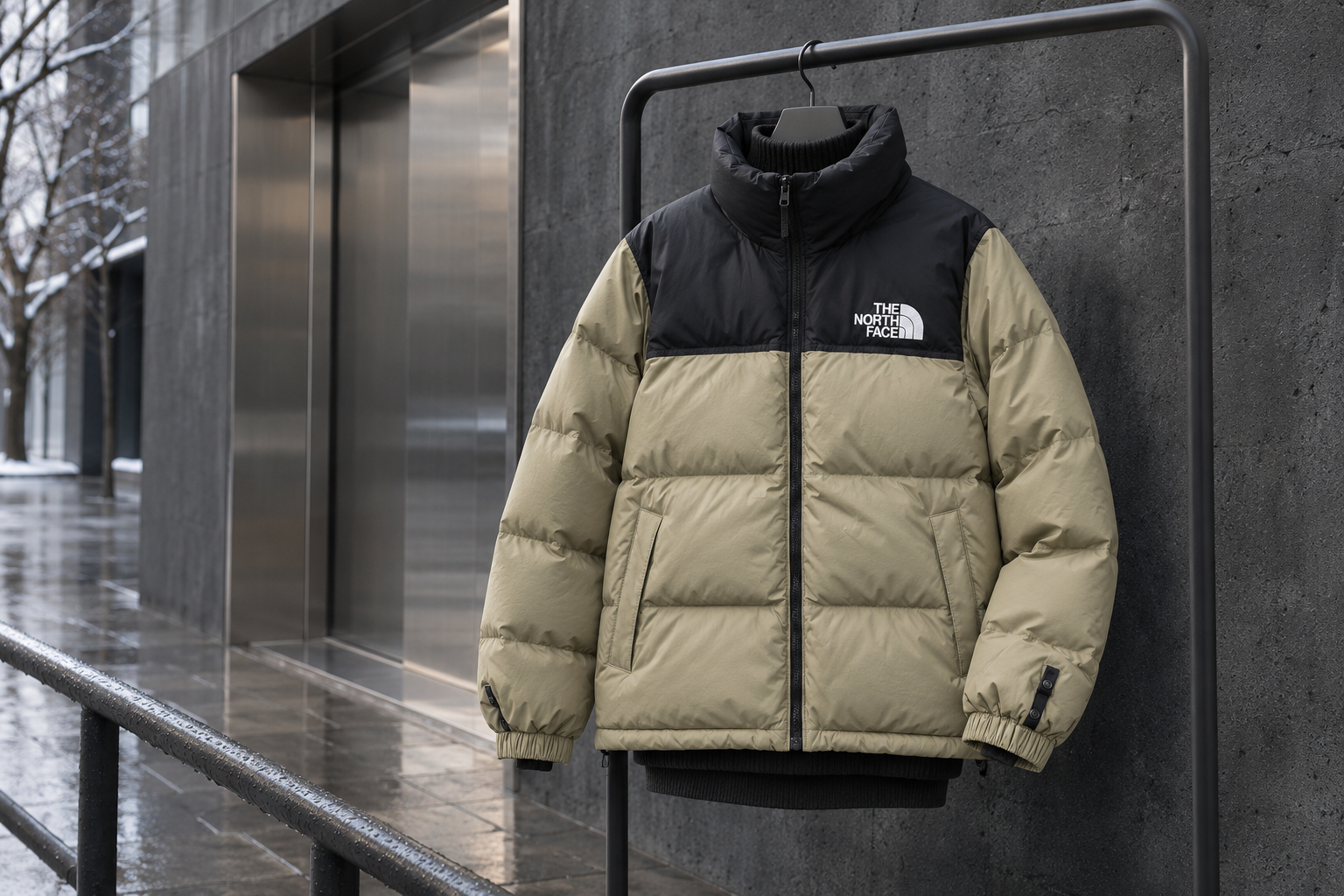
This black-khaki color-block stand-collar puffer is best styled with a black, khaki, and gray color palette, creating clear layers through the contrast between darker upper and lighter lower blocks. Its visual focus isn't on complex decoration but on the contrast between the black shoulder/chest area, the khaki body, and the horizontal quilted sections, so keep other pieces simple to avoid distracting from the overall look.
First, Understand the Color and Structure

The puffer in the image features a black upper body contrasted with a khaki main body and sleeves, a black ribbed inner lining at the stand collar, and a full-length black zipper down the front. The white The North Face logo on the chest stands out against the dark area, serving as a visual anchor for the entire garment.
Horizontal quilting divides the body into multiple sections, giving the khaki part a strong horizontal rhythm. There are zip pockets at the lower left and right, elastic cuffs with adjustment details, and visible tightening at the hem sides. This structure suits clean-lined trousers, letting the jacket itself carry the main layering without adding too many eye-catching details.
Three Easy-to-Control Styling Directions
The first is a basic black street style. Pair a black knit sweater or hoodie as the inner layer, with black straight-leg jeans or cargo pants, and finish with black sneakers. This makes the khaki jacket body stand out more, for a sharper, more urban look. Let the hood or collar peek slightly above the stand collar; don't pile it too high, or it will weaken the collar's silhouette.
The second is a gray transitional style. A gray knit sweater, charcoal gray trousers, and black shoes connect the black upper and khaki lower, softening the strong contrast into a more muted winter palette. Choose medium or dark gray rather than bright silver gray to preserve the jacket's understated texture. A gray scarf can add neck layering, but opt for a solid color to avoid competing with the chest logo.
The third is a khaki-coordinated style. For bottoms, choose dark khaki, olive green, or brown-gray trousers, but they should be darker than the jacket's main body to avoid blending completely. Shoes and bags can go back to black to anchor the overall palette. If using tonal pieces, vary the fabric texture; for example, smooth trousers with the quilted jacket will create clearer layers.
How to Highlight Key Features in Display
If displaying this puffer on a hanger or wall, show the full front, using a black rail, dark gray background, or metal fixtures as support. A cool gray background will make the khaki body pop, while black hangers and zippers echo the upper contrast section. Avoid placing too many similarly yellow-toned items nearby, as that would reduce the contrast between khaki and black.
Arrange accessories sparingly in black, gray, and khaki order, such as a black beanie, gray scarf, and dark shoes. Keeping colors within two or three base tones directly showcases the jacket's color-block logic. If you need to show pockets, cuffs, or hem adjustments, use close-up displays, but don't let details replace the full front silhouette.
What to Look For When Making a Purchase Decision
From the current image, you can assess the color scheme, front structure, pocket placement, quilting sections, cuff style, and logo presentation. It suits those who like obvious color-blocking, winter street style, and black-based outfits. If you prefer understated, monochrome jackets with minimal visual division, this black-khaki contrast might be too bold.
The image alone cannot determine insulation, warmth, fabric composition, fit, durability, stock, price, or authenticity. Judge these aspects separately using verifiable information from the specific product page, not just the colorway and photo appearance.