Broken Planet Hoodie QC: Print, Hood Shape, Stitching
Insight
Jonas ReinhardtThis guide is for buyers who are about to purchase a Broken Planet navy hoodie but aren't sure what to look for in QC photos. The goal is not to authenticate or guarantee quality from a single photo, but to first confirm that the photos match the specific item, and then decide based on visible evidence whether to request more photos, ask the seller, or hold off on ordering. 🧥 This check focuses on the Broken Pla
Jonas Reinhardt is Editor-in-Chief of the Kakobuy Yupoo Review Desk, writing agent comparison tables and leading retests. The work covers shopping-agent operations, parcel forwarding and QC photo standards, with Jonas signing off every hands-on score. Reviews are checked for order dates, QC photo notes, warehouse measurements and shipping-line timings, connecting the comparison tables with the records behind their scores. Each month, two reviews are selected at random and audited against original photographs and receipts, making publication approval and recurring checks of the supporting material part of the editorial work.
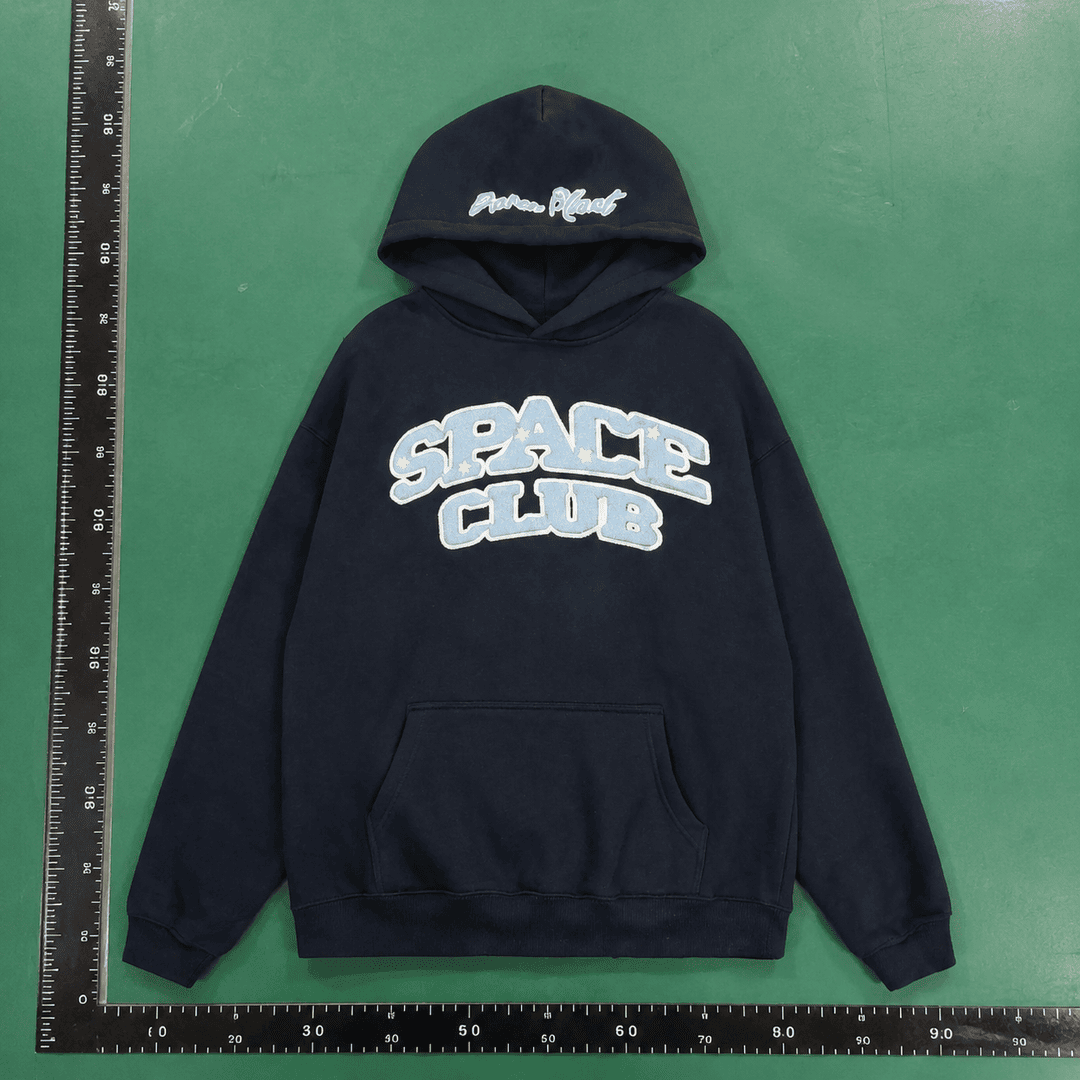
This guide is for buyers who are about to purchase a Broken Planet navy hoodie but aren't sure what to look for in QC photos. The goal is not to authenticate or guarantee quality from a single photo, but to first confirm that the photos match the specific item, and then decide based on visible evidence whether to request more photos, ask the seller, or hold off on ordering. 🧥
This check focuses on the Broken Planet navy hoodie on the fashion-reps product page, which provides a View QC Photos entry. Photos can only help observe appearance and visible workmanship; they cannot confirm actual feel, fabric weight, wearing comfort, post-wash changes, or all hidden flaws.
Defining the QC Check for the broken planet Hoodie
Before looking at photos, clarify three questions:
- Do the QC photos actually belong to the style, color, and size you intend to buy?
- Can the photos clearly show print placement, hood shape, drawstrings, cuffs, hem, and main seams?
- Should you request more photos, ask the seller, or hold off if you spot issues?
This check applies when you are already on the product detail page and using platform QC photos to make a purchase decision. It does not apply to inferring the current item from brand pages, category pages, or other product images, nor using photos as a substitute for size charts, fabric specifications, or after-sales policies.
Confirm Style, Color, and Size from the Product Detail Page
First, open the corresponding product detail page and confirm the product name and visual features. The image in this article corresponds to a Broken Planet navy hoodie described as oversized and boxy, with puff-print lettering, and available in sizes S to XL.
The product page also indicates uncertainty about fabric weight: it lists about 180–250 gsm, while other brand-level information describes similar styles as heavier. Therefore, QC photos can check appearance and structure, but cannot alone prove the garment is heavy. If thickness is a prerequisite, ask the seller for actual weight or measurements.
Before entering the QC gallery, confirm the following:
- The product name matches your target style.
- The color is navy, not gray or another color from the same brand.
- The print design and text match the detail page.
- You have noted your target size to avoid judging your item based on photos of a different size.
Access QC Photos via View QC Photos
On the product detail page, use the entry labeled View QC Photos to access the QC images. Do not manually guess image URLs or copy images from the homepage, brand page, category page, or related product pages.
Once in the gallery, first check the attribution:
- Is the color consistent with the product page?
- Does the print content, position, and fit match the current item?
- Can you see multiple angles of the same garment, not promotional images of different products?
- Do the photos belong to the current SKU or the item corresponding to your order?
The specified image corresponds to the QC evidence photo for the Broken Planet navy oversized hoodie. It can be used to observe the specific item shown on the page, but cannot be extended to conclusions about other Broken Planet products or all sizes.

Figure 1: The corresponding item is a Broken Planet navy oversized hoodie. The image is for observing visible appearance and structure, not actual feel, weight, or authenticity guarantee.
Check Front and Back Print Placement, Proportions, and Visible Offsets
When observing the print, don't just check if the design exists; break it down into placement, proportion, edges, and surface condition.
First, check the front print's alignment with the body's center line. Use the hood opening, body center, and hem as references to judge if the text or design is clearly shifted left or right. Slight angle variations may be due to the garment not being fully flat, so don't jump to "print is crooked."
Then check the print's relative distance from the hood opening, shoulder line, and hem. Prints may be the same size across sizes or scale with the fit, so you can't assume all sizes are consistent from one photo. If the angle is straight and the body is flat, but the print is still clearly off-center, request a flat front photo.
Also examine the print edges:
- Are there obvious gaps, rough edges, or large areas of excess ink?
- Is the spacing between letters abnormal?
- Are there obvious collapses, wrinkles, or peeling in puffed or thick print areas?
- Is the design partially hidden by wrinkles, preventing a full assessment?
Check the back print the same way. If the back is not fully shown or is blocked by the hood, sleeves, or packaging, record it as unconfirmed—do not assume it is normal. 👀
Inspect Hood Shape, Drawstrings, Cuffs, and Hem Structure
Examine the hood from front, side, and top angles. The point is not whether it looks three-dimensional, but whether left and right are roughly symmetrical, the hood opening is not obviously twisted, and the hood panel connections show no abnormal stacking.
If there are drawstrings, check if the two ends differ greatly in length, if there is obvious fraying around the eyelets, and if the drawstrings are caught in seams or wrinkles. If unclear in photos, mark as unconfirmed—do not write "no issue" when you can't see.
For cuffs and hem, mainly check if the ribbed connections are smooth:
- Is there a clear difference in width or closure between left and right cuffs?
- Are there skipped stitches, exposed threads, or localized wrinkles at cuff seams?
- Is the hem ribbing evenly attached along the body?
- Does the body appear falsely skewed due to not being laid flat?
These observations are structural checks at the photo level. They cannot prove elasticity, thickness, or long-term durability, especially not a substitute for actual stretch testing.
Observe Stitching, Seams, Stains, and Obvious Flaws
After zooming in on QC photos, check area by area rather than focusing only on the print center. Follow this order: collar and hood opening, shoulders, armholes, cuffs, side seams, hem.
Visible issues you can record include:
- Long, clearly curved or broken seams.
- Continuous skipped stitches, thread clusters, or fabric puckering at seams.
- Obvious light stains, oil spots, press marks, or irregular color differences on the dark fabric.
- Visible peeling, cracks, or large areas of adhesion at print edges.
- Missing, deformed, or asymmetrical hardware or drawstring ends.
For small loose threads, natural wrinkles, and shadows, judge by multiple angles. Bright spots, dark spots, and color casts in a single low-res photo may be due to lighting or compression, not actual stains or fabric defects.
Areas not shown in QC photos should be explicitly written as "not covered." For example, if inner seam allowances, print backs, armpits, and pocket interiors have no clear photos, you cannot claim the check is complete. 🔍
Distinguish Visible Evidence, Editorial Judgment, and Unconfirmed Content
To avoid treating speculation as fact, categorize observations into three levels:
| Information Type | What You Can Write | What You Should Not Conclude |
|---|---|---|
| Visible evidence from photos | Prints, hood openings, or seams visible from a certain angle; clear obstruction somewhere | The entire garment is flawless everywhere |
| Editorial judgment | The photo angle is generally suitable, but flat-lay photos are needed to judge offset | The item will definitely meet personal aesthetics or wearing expectations |
| Unconfirmed content | Actual weight, feel, post-wash changes, hidden seams, authenticity | The fabric is definitely heavy, durable, authentic, or quality guaranteed |
What this article can confirm: the specified image corresponds to the QC evidence on the Broken Planet navy hoodie product page and can be used to observe its displayed appearance, print, and some structure. This article cannot confirm areas not shown in the photos, nor provide authenticity judgment or quality assurance.
Decide Based on Conditions for More Photos, Asking, or Holding Off
If the print center, hood opening, cuffs, and main seams are visible from clear angles with no obvious flaws, you can proceed to check size, actual price, service fees, international shipping, and after-sales terms. The reference price on the product page is not the final cost; the final cost should be confirmed by your chosen shopping agent platform.
Request more photos when:
- The front print is hidden by wrinkles, making placement impossible to judge.
- There are no clear photos of the back, hood shape, or hem.
- The resolution is too low to distinguish stains, shadows, and print defects.
- The relationship between your target size and the size shown in the photos is unclear.
- Stitching or seams look abnormal, but close-up photos are missing.
If after more photos there are still obvious print offsets, continuous skipped stitches, severe stains, structural asymmetry, or key areas cannot be verified, you can hold off and first check the platform's return/exchange window and warehouse handling. Do not confirm an order just because one photo looks okay, and do not treat "looks acceptable" as a promise of after-sales service.
Final decision order:
- Confirm the photos match the current item, color, and target size.
- Check front and back print placement, edges, and surface condition.
- Check hood shape, drawstrings, cuffs, hem, and main stitching.
- List issues clearly shown in photos, plus areas still unconfirmed.
- Request more photos or ask the seller about key concerns.
- Decide to order or hold off after confirming price, fees, and after-sales terms.
This method suits buyers who want to reduce the risk of obvious appearance flaws and are willing to check photo evidence before payment. It is not for those who need QC photos to confirm authenticity, actual fabric thickness, long-term durability, or wearing effect. If you cannot accept that photos cannot cover hidden areas, or you cannot get more photos of key angles, it is not recommended to proceed with the purchase based solely on current photos. ✅
Article Images