Flat Lay: Black-and-Gray Clothing with Blue-White Sneakers
Insight
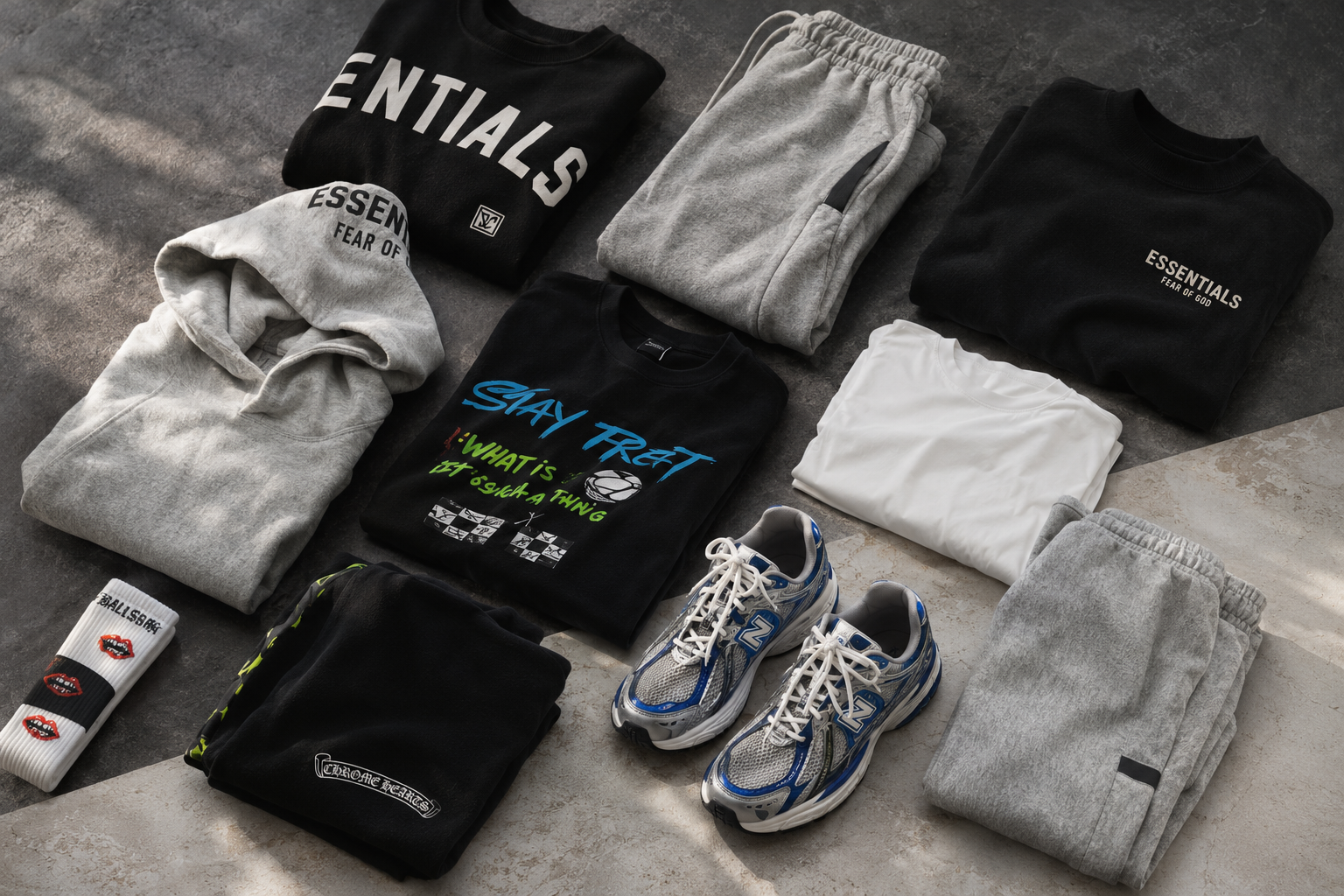
Jonas ReinhardtStart with the Overall Color Palette This flat lay is dominated by black, dark gray, and light gray, with white clothing and blue-white sneakers creating bright areas. This combination suits those who want a low-key base while keeping a visual focal point: black and gray unify the scene, white brightens it, and blue acts as an accent. For a simpler outfit, use a black top, light gray bottoms, and blue-white sneakers as the core. To add depth, layer a white inner piece between black or gray it
Jonas Reinhardt is Editor-in-Chief of the Kakobuy Yupoo Review Desk, writing agent comparison tables and leading retests. The work covers shopping-agent operations, parcel forwarding and QC photo standards, with Jonas signing off every hands-on score. Reviews are checked for order dates, QC photo notes, warehouse measurements and shipping-line timings, connecting the comparison tables with the records behind their scores. Each month, two reviews are selected at random and audited against original photographs and receipts, making publication approval and recurring checks of the supporting material part of the editorial work.
Start with the Overall Color Palette
This flat lay is dominated by black, dark gray, and light gray, with white clothing and blue-white sneakers creating bright areas. This combination suits those who want a low-key base while keeping a visual focal point: black and gray unify the scene, white brightens it, and blue acts as an accent.
For a simpler outfit, use a black top, light gray bottoms, and blue-white sneakers as the core. To add depth, layer a white inner piece between black or gray items to create clear light-dark boundaries at the edges.
Color Relationships in the Image
Several black tops or hoodies occupy the main visual area, one with the word "ESSENTIALS" and another with a prominent teal graphic. The teal print echoes the blue of the sneakers at the lower right, without being identical, so the image remains varied.
White clothing on the right reduces the heaviness of large black areas. Light gray items on both sides blend with the dark gray floor, bridging black tops and white pieces. Small red-and-black patterns on socks or accessories work better as local details rather than the main color of the outfit.
How to Style for Everyday Wear
- Black graphic tee with light gray pants, letting blue-white sneakers be the focal point when you want the shoes to stand out.
- Black top with black or dark gray bottoms, plus a white inner layer, to keep a dark tone while avoiding a monochromatic silhouette.
- White top with gray pants and an outer black layer creates a clearer light-dark contrast for a lighter visual weight.
- If wearing a top with a prominent teal graphic, keep other pieces in black, gray, and white so the print remains the single focal point.
The visible letters, patterns, and shoe panels already have distinctiveness, so avoid adding too many eye-catching elements. Especially with blue-white sneakers, the more restrained the surrounding clothing, the more visible the blue, white laces, and panel lines become.
Layering and Arrangement in Flat Lay Styling
This scene uses a diagonal layout, with black tops, gray clothing, white items, and shoes distributed across different areas to showcase multiple pieces. However, the clothes overlap, so some outlines are incomplete. To replicate this arrangement, first choose a main piece and then arrange colors and sizes around it.
Follow this order for placement:
- Start with the largest or darkest main piece, such as a black hoodie or top.
- Add light gray clothing near the main piece to transition between dark areas and the floor.
- Place white items in a more open area to create a brightening zone.
- Put the blue-white sneakers at the bottom or side, keeping the toe direction consistent to show the shoe silhouette more completely.
- Finally, add small items like socks to fill gaps, but avoid covering main prints or shoe details.
For shoes, preserve laces, panel divisions, and sole outlines. The two shoes can be slightly offset but should not completely overlap, or the blue-white color scheme and structural details will be hidden. A green shoebox next to the shoes can serve as an auxiliary color block; if you want a more unified scene, avoid adding too many bright colors elsewhere.
Limitations for Observation and Selection
This image is useful for judging color combinations, print placement, light-dark relationships between garments, and shoe-clothing arrangement. You can recognize some letters, patterns, laces, and shoe structures, but items overlap and lighting is dim, so you cannot determine full fit, size, fabric composition, workmanship, comfort, durability, model, or authenticity.
To decide whether a garment suits your style, check complete front and back views, length, neckline and cuff details, and shoe silhouette from different angles. This turns the color inspiration from the flat lay into concrete styling choices.

Summary
The key to this combination is not adding more colors, but using black and gray to establish a unified base, white to brighten, and blue to concentrate visual focus. When arranging clothing, prioritize clear outlines of main pieces, prints, and shoes, and create depth through the division of light and dark garments. For everyday wear, start with black-gray clothing paired with blue-white sneakers, then add white inner layers or light gray bottoms as needed.