Pink Cable-Knit V-Neck Sweater: Color and Display Styling
Insight
Jonas ReinhardtThis flat-lay image centers on a pink cable-knit V-neck sweater, paired with an off-white shirt, dark denim, and a gray-green soft furnishing background, presenting a soft yet layered autumn/winter color scheme. It suits referencing similar clothing combinations from three angles: color relationships, texture contrast, and display order. ## Apparel Details in the Frame 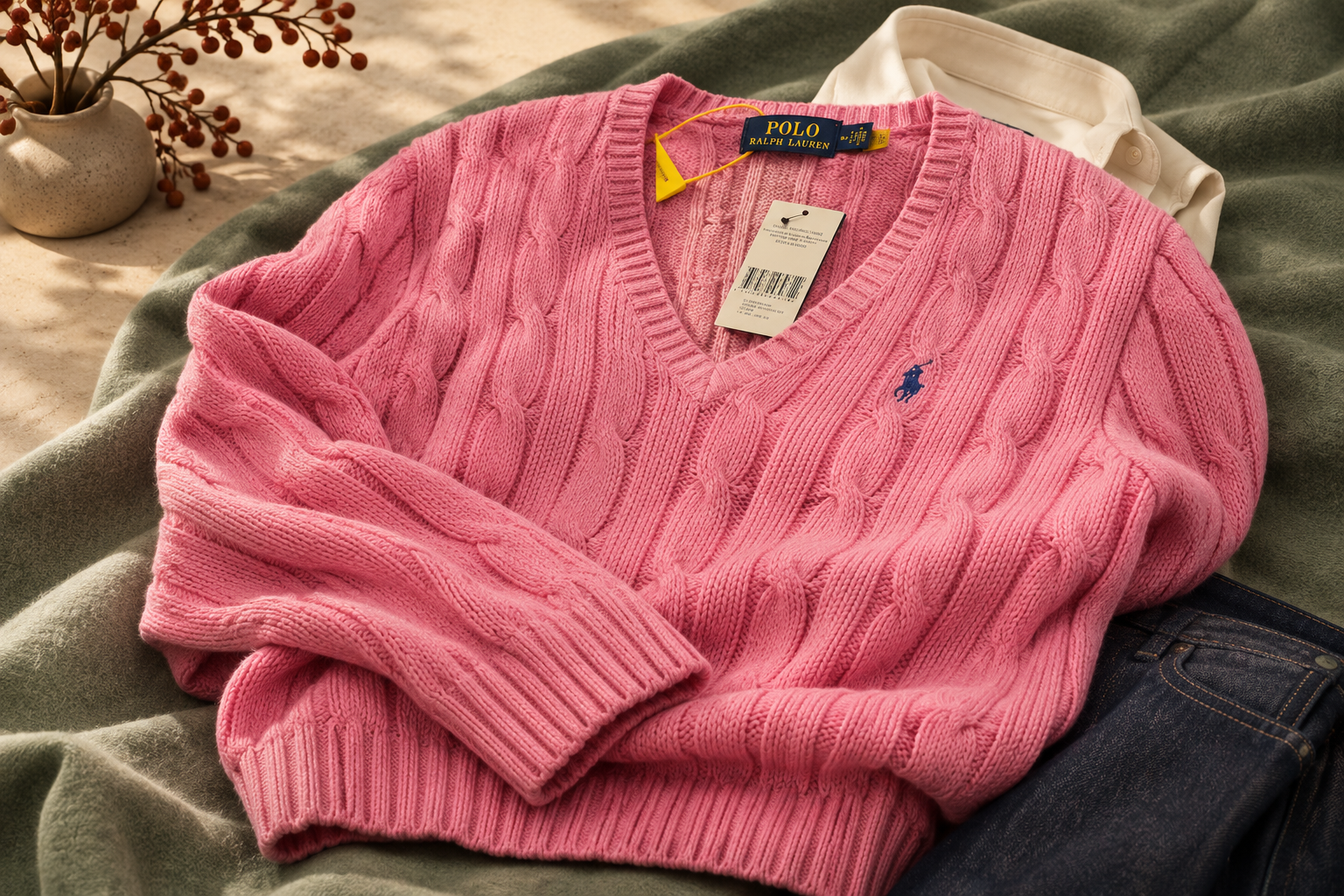
This flat-lay image centers on a pink cable-knit V-neck sweater, paired with an off-white shirt, dark denim, and a gray-green soft furnishing background, presenting a soft yet layered autumn/winter color scheme. It suits referencing similar clothing combinations from three angles: color relationships, texture contrast, and display order.
Apparel Details in the Frame

The sweater features a pink main color, with continuous vertical cables and twists across the body. The three-dimensional feel mainly comes from the knit texture itself. The V-neck, cuffs, and hem all use ribbed trims with clear edge outlines; the sleeves are naturally folded in front of the body, creating distinct layers.
Also visible in the frame are the collar and part of the body of an off-white shirt, dark denim at the bottom right, and a gray-green fabric as the large background. An equestrian motif can be seen on the chest, and brand fabric labels and hang tags near the neckline draw visual focus to the upper part of the sweater.
How to Borrow from the Color Relationships
Pink works as the main color, but large areas can look monotonous. The image uses an off-white shirt as the inner layer, reducing the saturation of pink and making the V-neck outline more prominent. When styling, opt for warm white, cream, or light beige as the base color to keep the overall softness.
Dark denim lowers the overall brightness, preventing the pink from looking too airy. For a crisper look, pair the pink knit with dark blue jeans, charcoal gray pants, or dark brown bottoms to create light-dark contrast.
The gray-green background provides a low-saturation cool tone, forming a gentle warm-cool contrast with pink. In similar displays, avoid adding too many bright colors; keep one striking main color and balance it with off-white, dark blue, and gray-green.
Display and Styling Suggestions
For flat lays, follow the order: main piece centered, inner layer collar showing, bottom edge visible, background area controlled. The sweater should dominate the frame. Fold the sleeves moderately to show cuffs and texture, but don't cover the chest motif or V-neck structure.
The inner shirt only needs to show the collar and a small part of the body. Off-white adds layers without stealing focus from the pink knit. Place the bottom at the frame's edge, using dark denim or another low-saturation color to anchor the composition.
For a warmer feel, add small props in light wood, beige, or terracotta; for a cleaner look, keep the gray-green or neutral background and minimize extra patterns. The knit texture is already rich; avoid large complex prints around it.
What to Focus on When Choosing
From this image, you can directly observe color, texture, neckline structure, trim style, and overall flat-lay silhouette. It helps assess a knit sweater's main color presentation and how cable texture pairs with shirt and denim.
However, flat-lay images cannot show actual fit, thickness, softness, warmth, material composition, true size, or durability. When considering similar styles, check additional photos from wearer or side angles, and note the size chart, material details, and close-ups on the product page.